Apple Event: iPhone 11, surprise price cuts, the series 5 watch
The entry-level iPhone 11 will start at $700, versus $750 of previous models, showcasing that Apple might have hit the ceiling this year as as iPhone sales fell
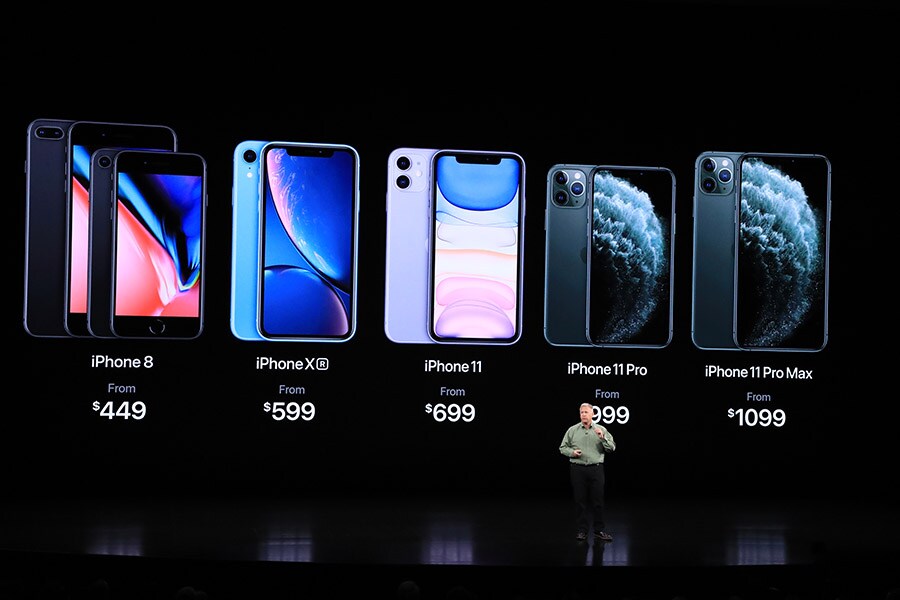 Phil Schiller, an Apple marketing vice president, presents new iPhone models during Apple's annual product launch event in Cupertino, Calif., Sept. 10, 2019.
 Image: Jim Wilson/The New York Times
CUPERTINO, Calif. — Apple’s product launches have long been full of surprises, but rarely has a price cut been among them.
On Tuesday, in a sign that Apple is paying attention to consumers who aren’t racing to buy more expensive phones, the company said the iPhone 11, its entry-level phone, would start at $700, compared with $750 for the comparable model last year.
Apple kept the starting prices of its more advanced models, the iPhone 11 Pro and iPhone 11 Pro Max, at $1,000 and $1,100. The company unveiled the new phones at a 90-minute press event at its Silicon Valley campus.
The cost cut on the iPhone 11 was unexpected because Apple had been raising prices each year as a way to keep revenues afloat while iPhone sales fell. But Apple might have hit the ceiling this past year. Sales of the two models that began at $1,000 or more lagged expectations, causing the company to cut revenue estimates and eventually slash prices in China to increase demand.
At the same time, Apple’s entry-level phone last year — the iPhone XR, at $750 — became the company’s bestselling device.
Analysts say that one issue with the rising prices has been that new iPhone features haven’t kept up. As a result, many people are holding onto their phones longer. The falling price suggests Apple sees that trend and is trying to entice more people to upgrade.
©2019 New York Times News Service